San Marcos Boutique Hotel
A virtual tour of Casa San Marcos
We invite you to get to know our hotel in an interactive way.
Hotel history
This emblematic mansion of Spanish origin was built in 1707 by the architect José Jaime Ortiz, originally conceived as a country house in what is now the Historic Center of Quito. The same architect is renowned for the construction of the Church of El Sagrario, one of the city's architectural gems. At that time, the property was valued at 700 patacones (a unit of currency).
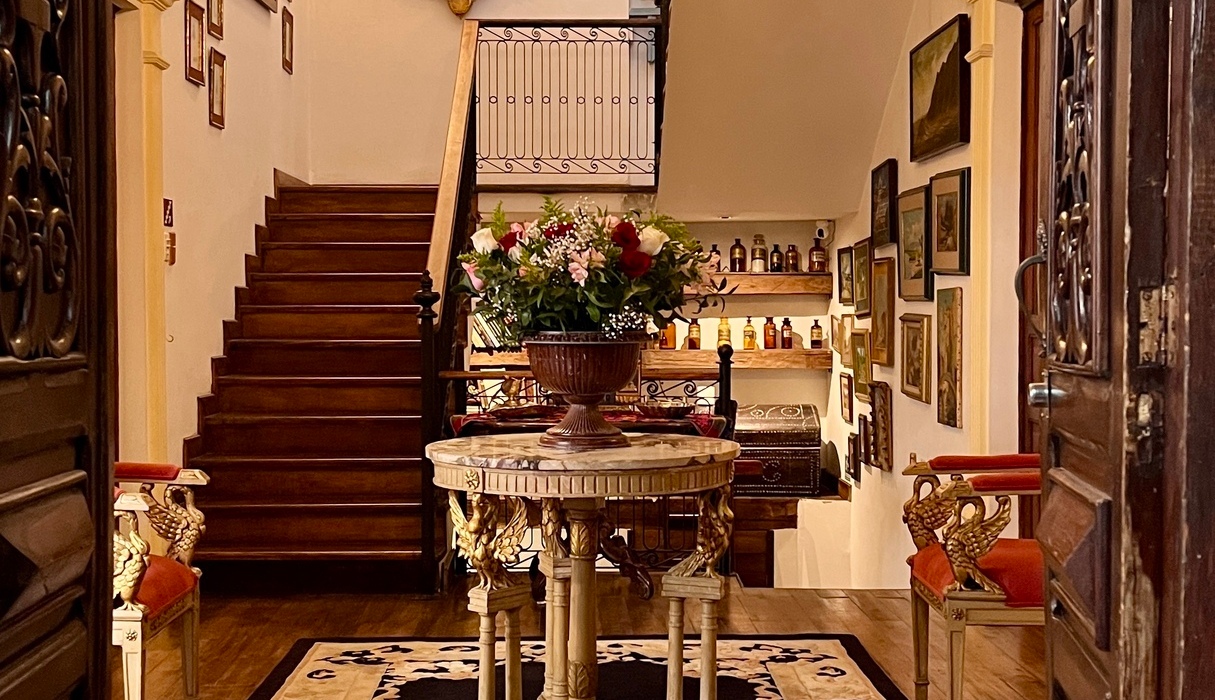
At the beginning of the 20th century, around 1920, the mansion was divided following an inheritance dispute between two brothers. The section that now houses Casa San Marcos was renovated by the Italian architect Antonino Russo, who designed and built the three floors in the north wing, visible from the street and which lend a distinctive character to the building.
The house contains emblematic spaces that have preserved their historical essence. The Hall of Shields, located in the colonial part of the mansion, takes its name from the family crest painted on leather, incorporated into an original 16th-century door. This space is surrounded by imposing adobe walls and decorated with Louis XVI-style furniture, French consoles and tables, as well as an elegant piano that enhances its stately atmosphere.
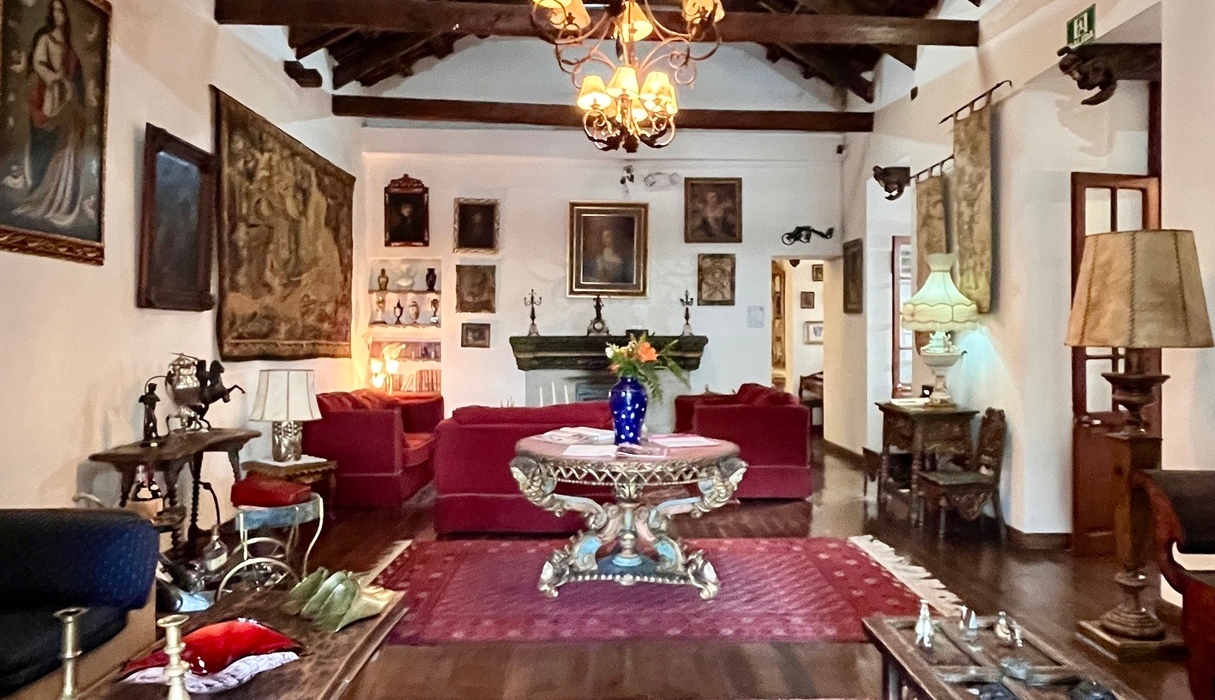
From here, one enters the grand main hall, known as the Hall of Angels, an architectural gem that has remained virtually intact for over three centuries. Its ceiling, crafted from wattle and daub and assembled with vines and rope, stands out for its technical complexity and beauty. The structure, built with fine woods, has admirably withstood the test of time, comparable to examples found in the Convent of San Diego and the Casa de Sucre.
The hall is decorated with a remarkable collection of European works and pieces from the Quito School. Among its furnishings are 18th-century marquetry pieces, a 17th-century Spanish chest, and various chairs and benches from the same period, which enrich the space's heritage value.
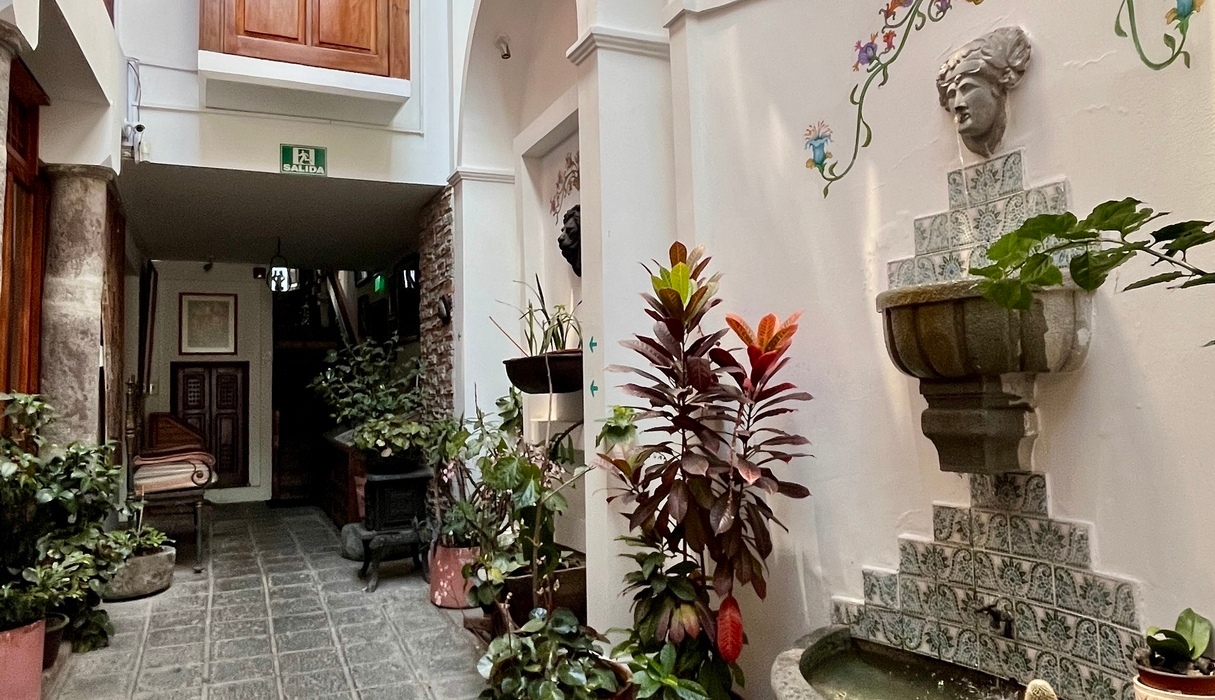
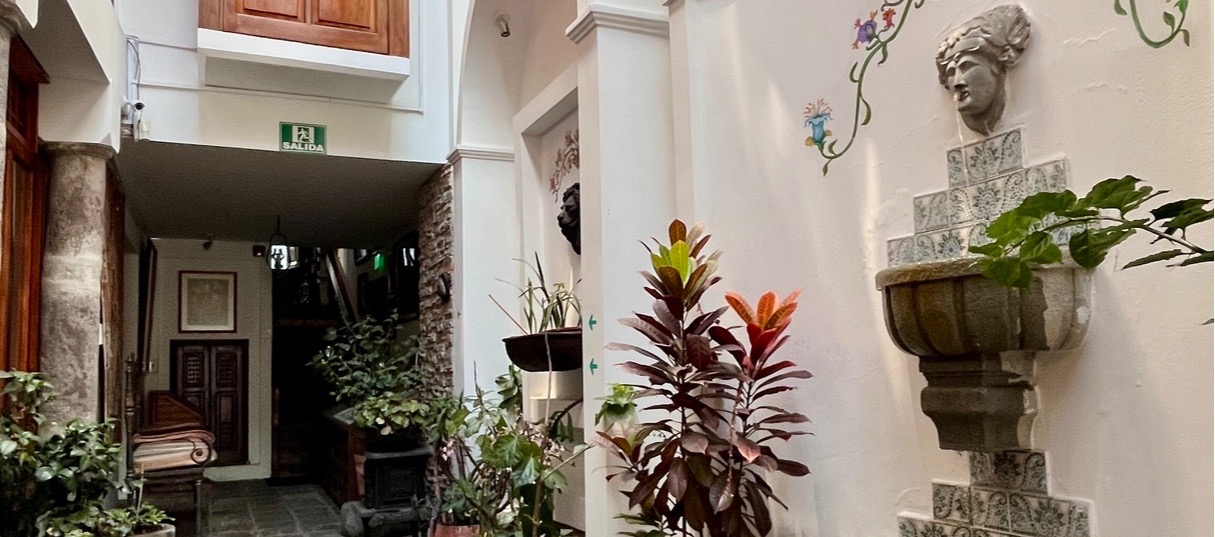
The tour continues to the Corridor of Frescoes, where Ecuadorian artist Pablo Cabrera Zambrano created the family's "Tree of Life." The artwork depicts a garden in bloom from which three birds emerge in flight, each with a symbolic meaning that connects the family's history to the present, integrating contemporary art within the historical setting.
Today, the mansion has been carefully restored and transformed into a luxury boutique hotel, preserving its original essence. Its spaces, decorated with antique furniture, continue to be a meeting point for artists, travelers, and culture enthusiasts seeking to experience the charm of the past in an authentic environment.
Casa San Marcos is not just a place to stay, but an experience to explore, contemplate, and feel the living history of Quito.